What Is the Tiout Oasis?
Tiout (also spelled Tiuout or Tioute) is a natural oasis in the Souss plain southeast of Taroudannt, fed by underground springs that have supported human settlement here for millennia. The oasis contains several thousand date palms, olive trees, pomegranate and almond groves, and a network of traditional seguia irrigation channels that still carry water to the surrounding fields.
Perched above the palm grove is the Kasbah of Tiout — a partially ruined 17th-century fortress that was once a seat of local Berber power. The kasbah has been partially restored and contains a small auberge and restaurant where you can take mint tea or a traditional Berber lunch with a view across the palmerie that extends all the way to the Atlas mountains.
Orson Welles chose Tiout as one of the principal locations for his 1952 adaptation of Othello. The kasbah's towers, its position above the palms and the quality of light in the Souss plain convinced him it was the perfect backdrop for Iago's machinations. The film won the Palme d'Or at Cannes that year.
How to Get to Tiout from Taroudannt
Tiout is located approximately 37 km from Taroudannt, a journey of about 40 minutes by car. The route heads southeast from Taroudannt on the P32 road towards Ouled Berhil, then turns south towards the oasis on a clearly signposted local road.
By Taxi
The most common option for independent travellers is to hire a grand taxi from Taroudannt for a half-day excursion. Agree the price before departure — a return trip with 1–2 hours waiting time typically costs 150–200 MAD (€14–18). Taxis gather on Place Assarag and outside Bab Zorgane.
By Car
If you have a hire car, the drive is straightforward and takes about 40 minutes. The road is well-maintained and suitable for ordinary vehicles. There is a small car park at the entrance to the palmerie.
By Guided Excursion
The most relaxed option is to combine Tiout with other highlights of the region on a guided day trip from Taroudannt. Contact us to arrange a custom excursion that includes the oasis, the kasbah and other nearby sites.
What to Do at Tiout
Walk Through the Palmerie
A network of paths runs through the palm grove, following the old irrigation channels. The walk takes 45–60 minutes at an easy pace and is one of the most peaceful experiences in the Souss Valley. In the right light — early morning or late afternoon — the grove glows with a deep, saturated green that feels almost unreal against the red earth and silver sky.
Look for the natural springs near the base of the kasbah: small pools of clear water surrounded by rushes and the sound of frogs, incongruous and wonderful in the middle of a near-desert plain.
Climb to the Kasbah
The kasbah sits on a rocky spur about 100m above the palm grove. A steep but manageable path leads up to it in about 15 minutes. The views from the ramparts — over the palmerie, across the Souss plain to the snow-capped High Atlas in the north, and south towards the Anti-Atlas — are extraordinary and justify the climb entirely.
The kasbah's auberge serves traditional Berber food: tajine, couscous and pastilla made with ingredients from the oasis itself. A lunch here, on the terrace with the atlas as backdrop, is one of the great simple pleasures of southern Morocco.
Visit the Village of Tiout
The village of Tiout, spread along the edge of the palm grove, is a working Berber agricultural community. Villagers still farm the oasis using traditional techniques; the women weave and the men tend the orchards. It is not a tourist village and visitors are welcome but should be respectful — dress modestly, ask before photographing people and buy something from the small market if you'd like to contribute to the local economy.
When to Visit
Tiout is beautiful year-round but the most photogenic times are:
- October–November: Date harvest season. The palm grove is busy with harvesters and the colours are extraordinary — deep orange dates against green palms against a vivid blue sky.
- February–March: Almond blossom season. The groves around the oasis are full of white and pink blossom and the air smells extraordinary.
- April–May: Perfect temperatures (20–28°C), long days and a lush green palmerie after the winter rains.
Summer (June–August) is manageable but hot — 35–40°C. Visit early morning and take a long lunch break in the shade of the kasbah restaurant.
What to Bring
- Comfortable walking shoes — the path to the kasbah is uneven
- Sun protection — the palm grove provides shade but the open plain does not
- Cash in dirhams — there are no ATMs at Tiout
- A light layer for the kasbah, where the breeze can be cool
- A camera — the light here is remarkable at most times of day
Ask the kasbah restaurant to prepare a Berber breakfast (msemen, honey, argan oil, fresh mint tea) for your arrival. Call ahead the evening before through your riad — they'll have it ready when you arrive and it turns a day trip into a proper occasion.
Combining Tiout with Other Sights
Tiout pairs well with a visit to the prehistoric rock engravings at Tizi n'Tazaght, which are located about 20 km further along the same road. The engravings, carved into rock faces between 3,000 and 6,000 years ago, depict elephants, giraffes and antelopes — animals that once roamed a Sahara very different from today's desert.
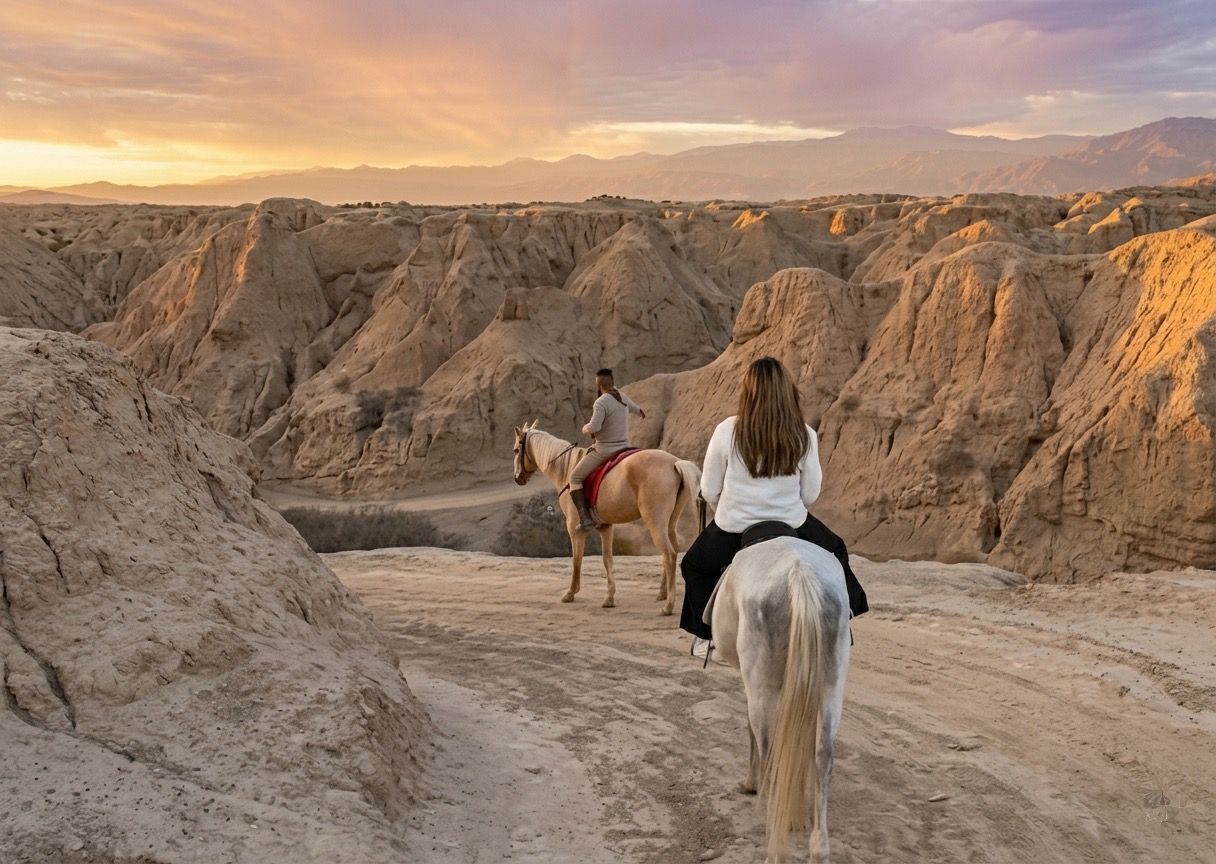
You can also combine a Tiout visit with a horseback excursion — ride to the oasis through the Souss plain on horseback rather than by road. See our horseback riding guide for details.
Getting Back to Taroudannt
If you came by grand taxi, your driver will wait. If you came independently, the same taxis that brought visitors will generally be available for the return — or ask at the kasbah restaurant, where they can usually call one for you. Plan to be back in Taroudannt by late afternoon so you have time to shower and explore the evening medina before dinner.